Showing posts with label 2014 at 10:15AM. Show all posts

Friday, April 25, 2014

I Scream, You Scream, We All Scream for– Bubble Tea?

Also known as milk tea, boba, 珍珠奶茶 (zhen zhu nǎi chá), and pearl milk tea, “bubble tea” is an increasingly popular sweet drink in the U.S.


It originated from Taiwan in the 1980s, although exactly in which city and by whom it was invented is disputed – either at a tea stand in Taichung or at a Tainan teahouse. Historically, the oldest known bubble tea was a delightful concoction of hot Taiwanese black tea, small tapioca pearls, condensed milk, and syrup or honey.


original-boba-pearl-milk-tea

An “original” pearl milk tea, you can’t go wrong – black tea with milk and tapioca pearls, or “boba”


To enlighten anyone who hasn’t experienced this kind of Asian foodie culture, “bubble tea” is basically tea with milk, some type of sugar or sweetener, and tapioca pearls. “Bubble” refers to the tapioca pearls, which are usually black and are small and round, resembling bubbles; they sit at the bottom of the drink and have a soft and chewy texture.


boba-bubble-tea

Be adventurous and don’t just look at the pearls’ pretty colors – try other types of boba!


Typically sweet and cold, these drinks come in a massive array of variations. Sometimes, in addition or instead of pearls, you can request other types of add-ons, such as pudding or jelly. The tea itself can vary from black or green tea. Additionally, there are fruit versions, like mango milk tea, and even fruit-tea fusions, such as peach green tea.


Following the popularity of bubble tea, countless tea shops have popped up all over the world, even in Western countries: Fantasia, Boba Loca, Tapioca Express, Quickly, Half and Half (my personal favorite) – just to name a few.


boba-pudding-milk-tea

How about this one to hit the spot, whether it’s your sweet tooth or your cavity: boba and pudding snow milk ice tea, drizzled with molasses


At most milk tea joints, the options for personalized drinks are flexible. Any tea drinker who knows exactly what they want can request less (or more) ice, a certain level of sweetness, omission of pearls, milk substitution. It’s like the Asian version of Starbucks – but better!


boba-bubble-green-tea

Yummy and refreshing, kiwi fruit tea!


As with any other food trend, with popularity comes controversy and scandal. For bubble tea, the trouble comes in the form of health concerns. With all its sugars and empty calories, bubble tea is by all means not what one would consider a healthy drink. To drag down its nutritional value further, tapioca pearls, milk powder, and juice syrups, all of which are commonly used ingredients in commercialized bubble tea due to their relatively low costs, have been found to contain banned chemical additives, linked to carcinogens and hormone imbalances. Fortunately, a quick Google search yields many results for healthy DIY bubble tea recipes.


bloomberg-nyc-sugary-drinks-ban

Whew, at least bubble tea wasn’t on the line-up for New York City’s sugary drinks ban


Nonetheless, despite its controversial health properties, bubble tea is pretty darn delicious and reasonably priced. It’s no surprise that it continues to reign as a stylish and dessert-esque drink option, especially in large cities with diverse cultures. Sometimes I wish I could drink bubble tea everyday but, alas, it remains a wonderful and occasional treat.


Tuesday, March 25, 2014

Is Another Cold War Brewing on the Horizon?

The Russian presence in Crimea seems to recall the Soviet Union’s post-World War II expansionism and the resulting era of global bipolarity, when the world seemingly fell under two divisive ideological banners. Although the communist regime has since collapsed and Russia no longer holds its status as the U.S.’s rival superpower, the current international situation strikingly parallels the historical atmosphere during the Cold War.


america-under-communism

Cold War propaganda


A brief history crash course:


The Cold War world was largely divided into two sides: the United States and its allies on one side and the Soviet Union and its allies on the other. This division was responsible for shaping the domestic politics of many developing nations, as well as the direction of global progress.


China was a key player in this schism. As a communist power, its allegiance was given to the Soviet Union, its neighbor to the North. However, as the relationship between Mao and Stalin disintegrated, so did the alliance between the People’s Republic of China and the Soviet Union. This eventually resulted in the Sino-Soviet split in 1961.


For the U.S., this situation was ripe with strategic opportunity; thus, the U.S. began courting China’s favor, which would make a big difference in the international balance of power. As regional relationships developed, this balance transformed into one of tripolarity, as one could no longer count on China (and its UN Security Council seat) to side with the USSR.


How is this related to what’s going on in Ukraine?


ukraine-russia-china-map

When talking geopolitics, it always helps me to see a map. Where is Crimea? It’s south of Ukraine, that drop of land in the Black Sea.


world-political-map

In a busy “big picture” perspective


Once again, Russia and the U.S. are at odds, with international attention focused on how China will respond to this controversy. Some have argued that Vladimir Putin’s annexation of Crimea is a move to return Russia back to its Cold War glory. It also appears that the PRC is once again stuck in the middle.


In recent years, the relationship between China and Russia had been strengthening since their Cold War antagonisms. The two neighbors have often taken the same side on a range of diplomatic issues. Chinese President Xi Jinping had made a state visit to Moscow in 2013, while Russian President Vladimir Putin had put forth the idea of a special relationship between the two powers. Furthermore, trade relations have been booming. It seems that China would support Putin’s actions.


Yet, the Russian Federation’s invasion goes against the international codes of national sovereign and territorial integrity, an issue on which China has always held a strong stance. Supporting this expansionist action would go against China’s record of advocating national sovereignty. Not only that, but supporting Crimean separatism could fuel China’s own separatist movements.


china-russia-crimea

Who is leading? It’s all perspective


Based on these factors, China’s decision on this issue could be highly indicative of the direction of its own political development. When China abstained from the UN Security Council vote on a Crimea resolution, it reflected the difficulty of their positioning. Some have taken this abstention as a marker of China’s condemnation of the Russian intervention in Ukraine. Some have interpreted this as a show of support. Others claim that this action should be taken for its face value: that China wants to refrain from taking any side.


It seems that now, much like it was during the Cold War, the question of which side China is on is extremely relevant to the future of international politics. More than that, China’s concerns are also highly self-reflective.


It’s no secret that territorial disputes and separatism are issues that have plagued the Chinese government for a long time. Particularly in regard to Taiwan and Tibet, China could undoubtedly see its own territorial issues reflected in the current international controversy surrounding the Crimean separation from Ukraine.


What happens next could indicate to China how similar actions on its part toward its own troubled territories would play out. In this case, perhaps it is best for China to refrain from any clear position on this issue. Knowing that Russia would inevitably veto the UN resolution on Crimea, perhaps it was wise for China to abstain.


Ultimately, how the Crimean crisis plays out could possibly give us a snapshot of Chinese policies going forward, and the future of the global balance of power.


Friday, January 10, 2014

China’s “Tragedy of the Commons”

“Tragedy of the commons”, primarily an economic term that describes the phenomena of overused common resources, has become the drama in the everyday life of Chinese people. Public facilities like parks, libraries, and transportation, poorly maintained and regulated, are excessively exploited. Here are some typical scenes in China:


china-subway

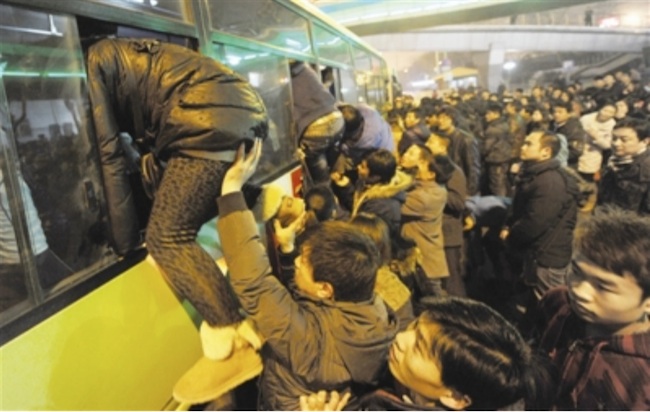
“Rush hour” at bus stations and subways


crowded-chinese-subway

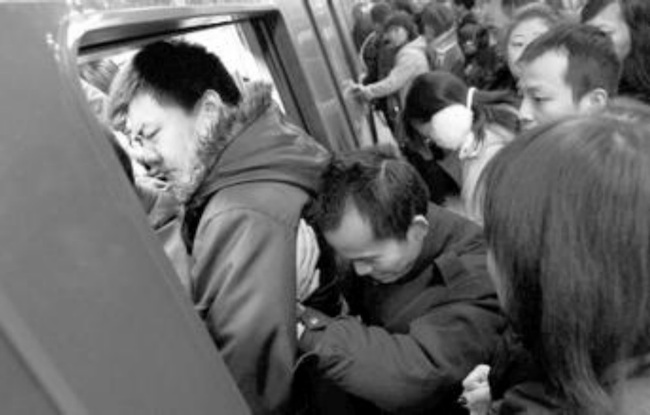
For many Chinese people living in big cities, fighting for seats – or even a space for one’s body – is a routine part of their life


china-traffic-jam

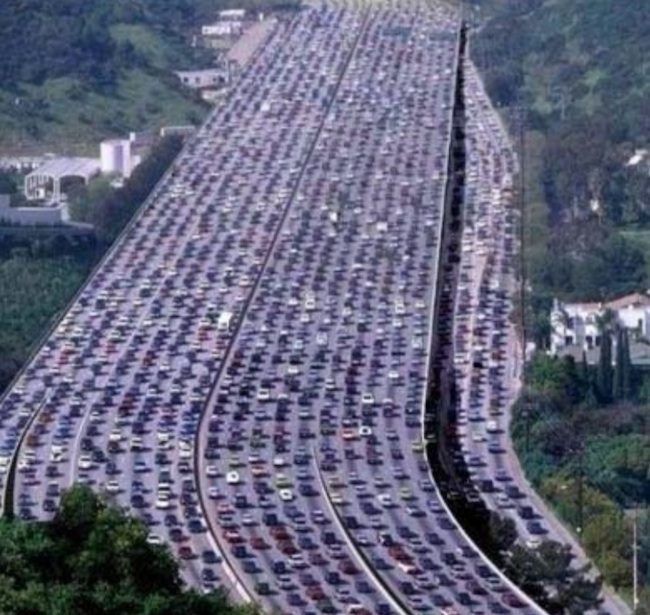
A traffic jam to rival the notorious Los Angeles lanes


chinese-exercising

A dance in the square (广场舞)


The activity you see in the picture is called 广场舞, or “dance in the square”, which literally means a bunch of people dancing in a public square. “Though not artistically designed, this activity is quite popular among middle-aged women in China: indeed, such exercise is good for their health, though it’s definitely not the only option for exercising. However, these dancers take up a large public area, and the music they play is always loud and noisy.


In my hometown, I could barely walk in a nearby park without stepping on someone’s feet after the nightfall, because there were sometimes over four hundred people moving around in a space no more than 1,000 square meters (10,784 sq ft, or about the size of a baseball diamond). Due to the music and other noise, I needed to shout to my friend in order for her to hear me.


In my city’s public library, there was a study room. In China, from June to August is the period when many college students and graduates study for the civil service examination (a test used to select government officials) and the postgraduate entrance exam (think of it like the Chinese GRE). Yet, most of their dorm rooms or apartments are unbearably hot at this time of the year. As a result, the air-conditioned study room becomes highly desirable.


Last year, I witnessed the Rumble in the Library: by 8:00 o’clock in the morning, a large group had already thronged outside the gates of the library. A few guards stood inside the gates, keeping a keen eye on these people. Once the gates opened at 8:30 a.m., the group, some men in suits and some women in high heels, wrestling about and pushing aside their neighbors, stormed upstairs to the study room. I was dumbstruck by their valor and energy.


At the door of the room, there was a second line of security. A guard dragged a desk to block the door and let in only a limited number of people. Arms akimbo, he yelled to those of us who swarmed outside the door: “You, don’t push! If I ever see anyone sneaking in, I will kick that person out of the room!”


Inevitably, a large portion of those who successfully got in were young men, because they were physically advantageous. Once they’d secured a seat, these men sat down with a relieved sigh, fanning themselves with their papers and books. Not hurrying to their original purpose, they took their time, and with amusement, instead studied the crowd outside, as if they themselves hadn’t been one of the anxious, pushy mass a minute ago.


Other reading rooms in the library wouldn’t let people in to study. Each room had a staff standing at the door, checking the readers’ personal belongings: they weren’t allowed to bring in any of their own books, and they could only read newspapers or books offered in the room. In the end, I had to sit on the stairs and read my own book. It was even cooler on the stairs, though, compared to the air-conditioned rooms pack with bodies.


Excepting the problem of “moral rust” that exacerbates in the competition of common resources, I can see from my personal experience that this chaos also invited bullying by the library staff. Despite the intentions of the controversial “one child” policy, China’s population remains a large number. The amount of public facilities, on the contrary, is far from enough. Both factors compound the competition of common resources in China: the ideas of rule and morality evaporate in the face of scarce public resources and overwhelming needs.